About the Journal
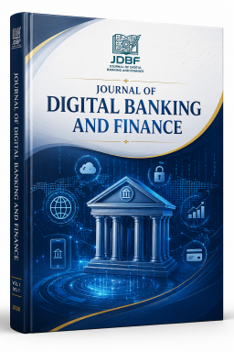 |
Journal Title | : | Journal of Digital Banking and Finance (JDBF) | |
| Frequency | : | 2 Issues per year (June & December) | ||
| Language | : | English | ||
| Editor in Chief | : | Mahsun, M.E | ||
| DOI Prefix | : | - | ||
| e-ISSN | : | - | ||
| Publisher | : | Nawa Edukasi Nusantara | ||
| Indexing | : | Google Scholar | Garuda | Copernicus | Crossref | ||
Journal of Digital Banking and Finance (JDBF) is an international, peer-reviewed, open-access journal dedicated to publishing high-quality research in the fields of digital banking, finance, Islamic finance, and Islamic banking. The journal provides a scholarly platform for researchers, academics, practitioners, policymakers, and industry professionals to disseminate original research, theoretical developments, empirical findings, and innovative practices that contribute to the advancement of banking and financial systems in the digital era. JDBF promotes interdisciplinary research that explores the transformation of financial institutions, markets, and services through technological innovation, sustainable development, and Sharia-compliant financial principles. The journal welcomes original research articles, review articles, conceptual papers, and case studies that offer significant academic contributions and practical.